



|
|
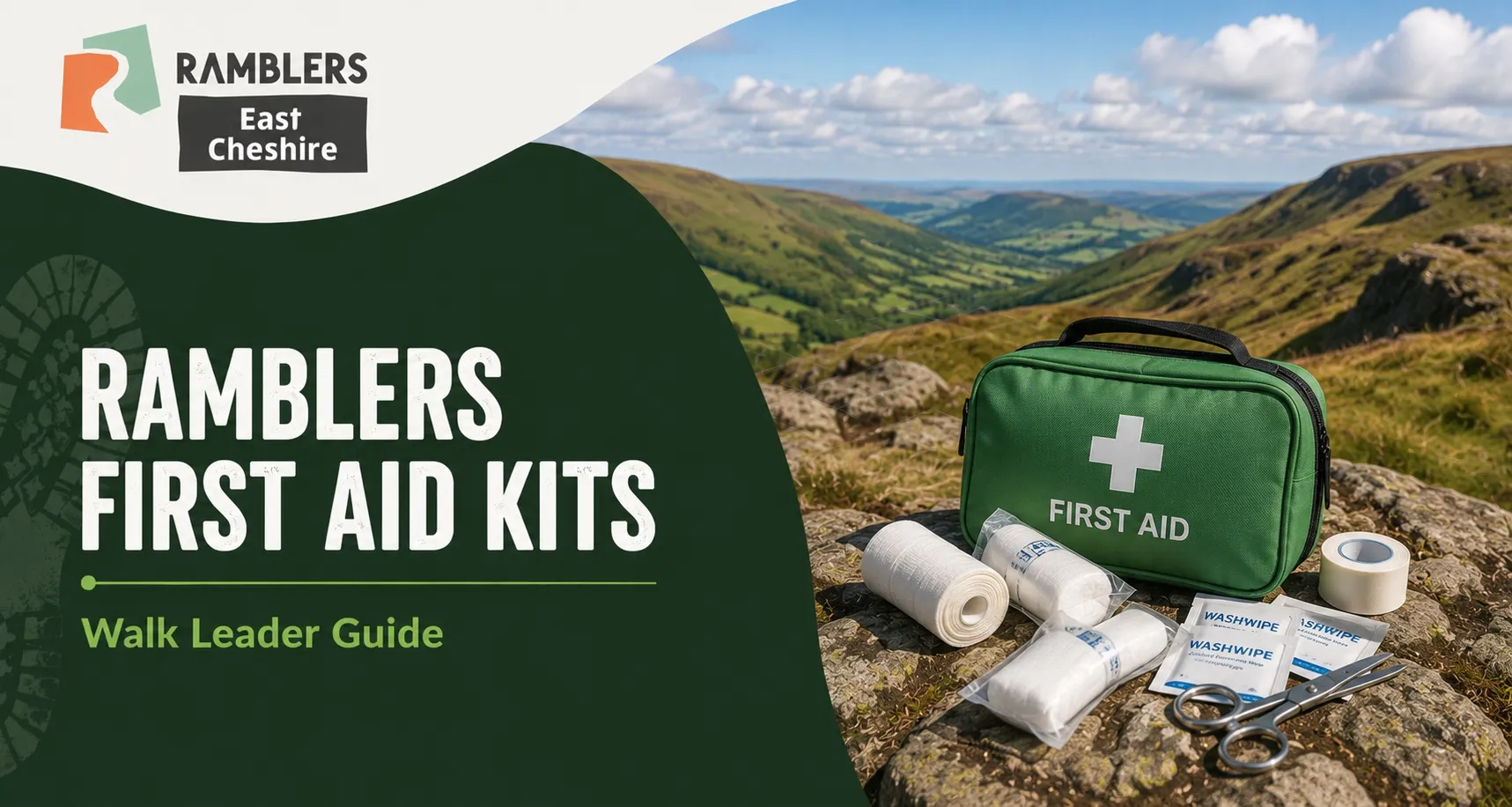
 RAMBLERS RECOMMENDED FIRST AID KIT
Exactly what you include in your first aid kit will depend on how long you’re planning to walk, where you’re hiking, the terrain and other conditions.
For short strolls, if you are walking on well-made, low-level footpaths for a couple of hours or so, you shouldn't need to carry much. For longer walks or for walks tackling more demanding trails, it pays to bring a few more items in case of sprains, cuts and other mishaps.
SOME SUGGESTED KITS:
FOR ALL WALKS
- Latex-free plasters and Blister Plasters
- Sterile cleansing wipes – or clean wounds with clean water
- Antihistamine cream or tablets (for nettle or insect stings/bites)
- Wound dressings + micropore tape to treat grazes and bigger cuts
- Tick-removal tool or tweezers
FOR LONGER SHORT, MEDIUM AND LONG WALKS
- Extra water/fluids
- Glucose tablets/energy bar
You could also carry:
- Triangular and woven bandages + safety pins and scissors for strapping up sprains, crafting a sling for an arm, wrist or shoulder injury
- Hand sanitizer or hand cleaning wipes
- Foil survival blanket
ADDITIONAL ITEMS to consider or longer, more difficult or remote walks
- Disposable gloves – to reduce the risk of infections when dealing with any bodily fluids
- Zinc oxide tape or vet tape – useful for blisters, wounds, providing extra support for joints e.g. fingers
- Face shield with a valve – to protect you from potential infections when performing CPR
- Tough cut shears – to cut clothes to access an injury
- Tweezers – handy to remove thorns or splinters
- Water pods or a water bottle which provides a good squirt of water – helps clean open wounds
- Cohesive bandage – a self-adhesive bandage that securely holds a dressing in place
- Instant ice pack – to reduce swelling from any bumps, strains or knocks
- Thermometer – to help monitor body temperature in case of a serious incident when you are far from help
- Steri-strips – to stitch minor gashes or large cuts
- Sterile eye pad dressing – to protect the eye in case of injury. Two are recommended where eye movement needs to be minimised due to the injury.
- SAM splint – handy for suspected sprains and breaks
- Group shelter – these can be a life saver, and we’d really encourage walk leaders to consider having one when the weather is changeable or help could take time to reach them. It’s a great way to keep the group and casualty warm, safe and dry until help arrives.


