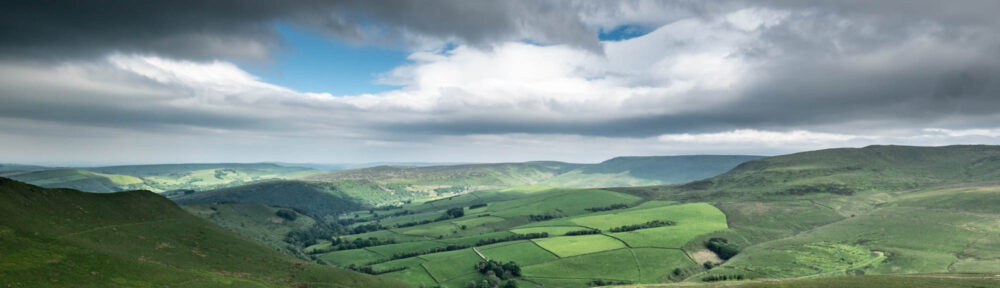
Heading south from Styal railway station, Wilmslow FP 19 crosses fields and, for part, follows a deep wooded valley to emerge on Stanneylands Road by Linney’s Bridge over the River Dean. At several places the wooded section of path floods where field drains emerge from the adjacent higher fields. At several locations the field water has seriously eroded the path such that it was threatened with closure for safety reasons. The wood stiles were in poor condition, and tree branches, hollies and hawthorn obstructed the path. A major path reinstatement was called for.
With this in mind, many ECR FP Projects Team visits were made from October ’22 to November ’24. Up to 6 men and women attended on 21 days (accumulatively 63 person-visits) totalling a minimum of 296 hours work excluding lunch breaks. I thank the team of fifteen attendees…… Janet Allan Melanie Davy David Hallet Ken Hobbs David James Roger Jubb Chris Munslow Steve Osborne Steve Rawlings Damian Richardson Jim De Santis Jane Selva Ian Wasson Nick Wild and myself!
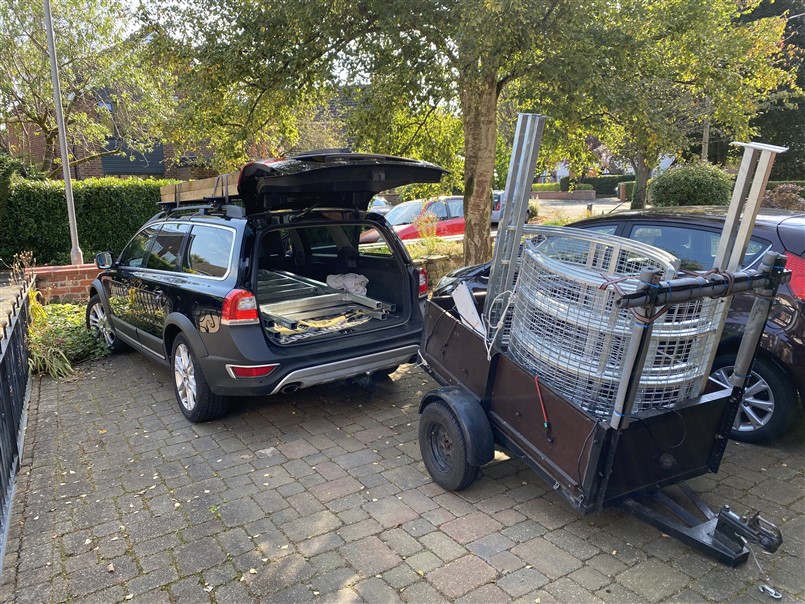
During this project period, I made several trips to CEC’s PROW Footpath Materials depot at Winsford to collect four galvanised kissing gates, several fence posts, rails, finger posts and waymarker posts, and other miscellaneous items (with thanks for the loan of Chris Munslow’s Trailer). I purchased locally (at ECR’s/Ramblers expense) and collected 5 No. 3.6 metre long, 40 x 200 mm section, edging boards, several post concrete bags, 1 No. 6 metre long, 225mm diameter plastic pipe and a 25 metre long roll of 100mm diameter perforated plastic field drain piping.
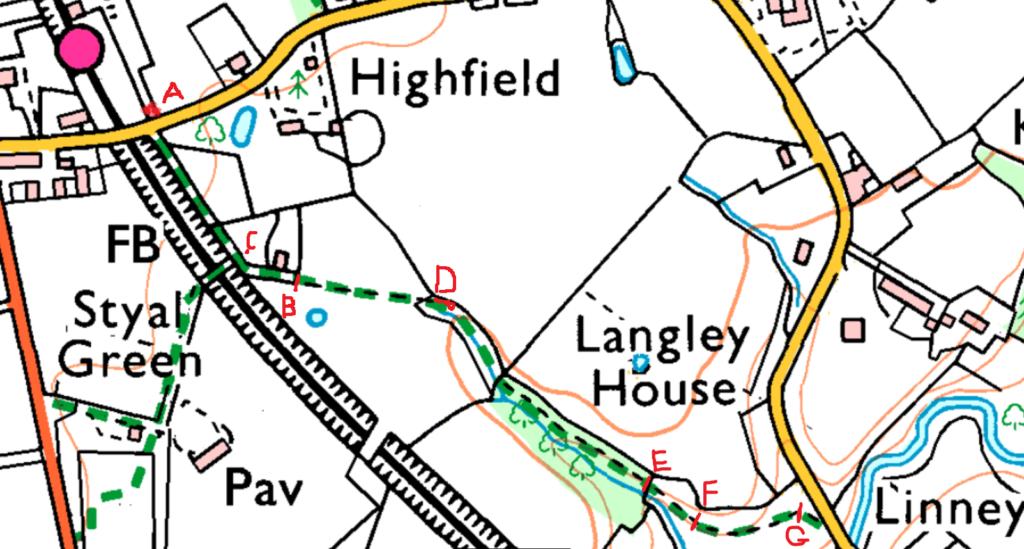
I ordered two one-ton jumbo bags of 20mm sized limestone aggregate, which were delivered to site A at the station entrance. Their contents were shovelled into rubble bags to form wheelbarrow loads, then taken 450 metres to site D for storage until required as a filter medium around drain pipes. 25 – 30 journeys made this a heavy day’s work. (We were let down by a hire firm who were meant to loan a mechanised wheelbarrow which apparently had a mechanical failure the previous day!)
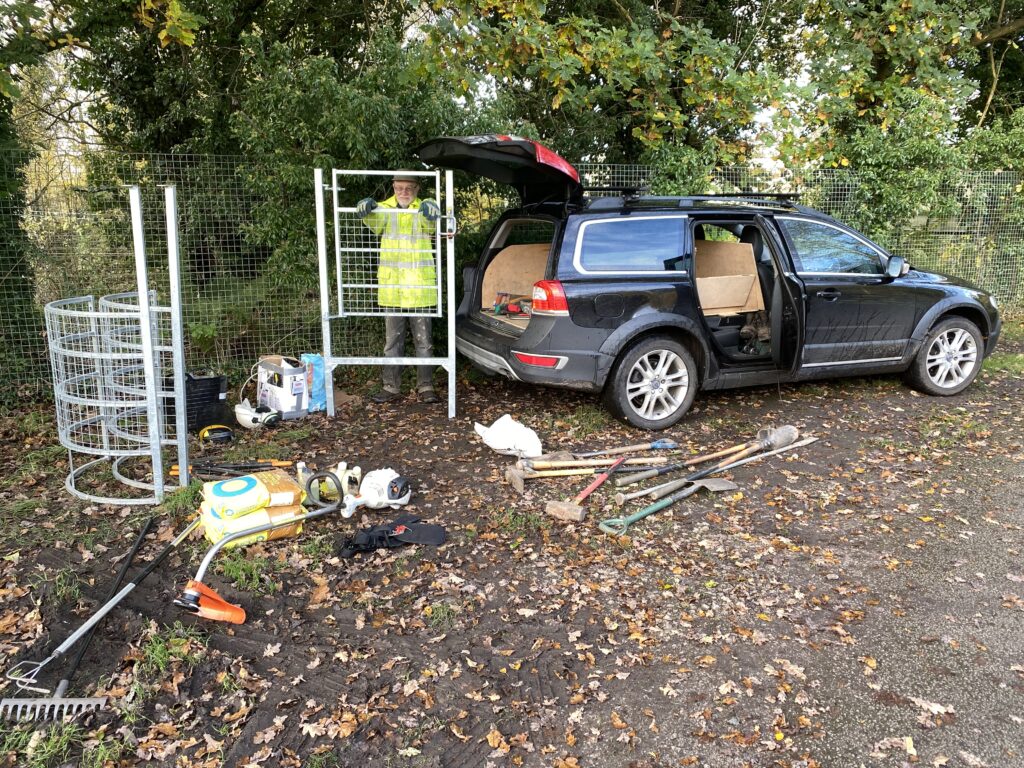
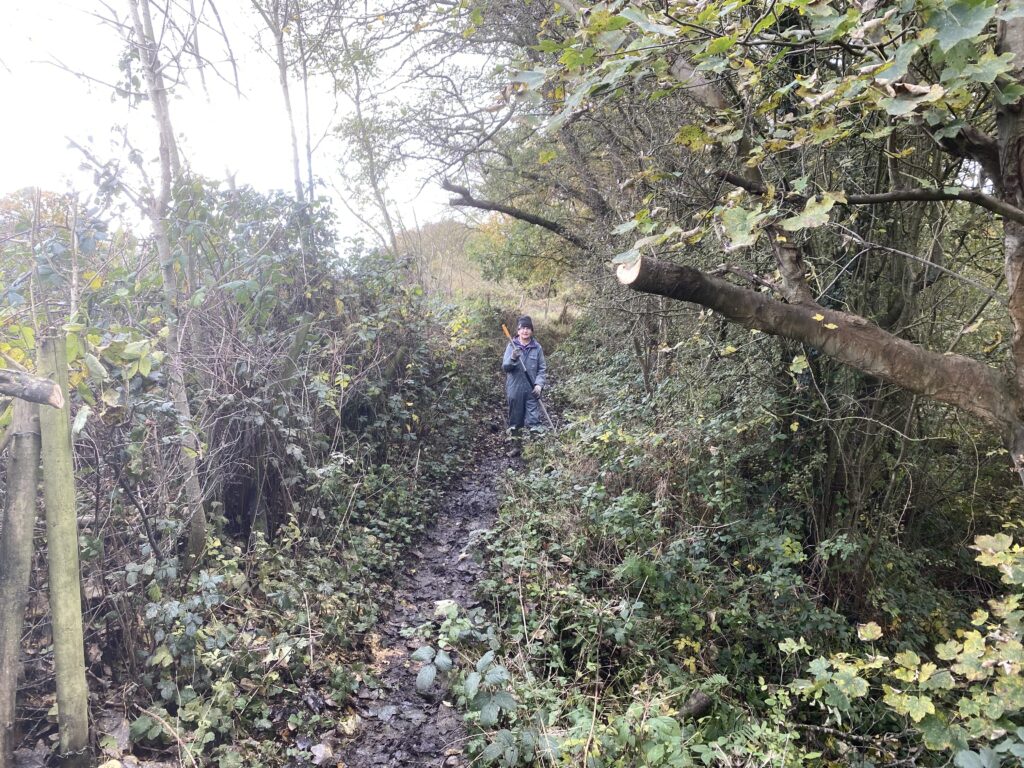


Periodically members carried out dense vegetation clearance to widen the path’s access by up to one metre each side.
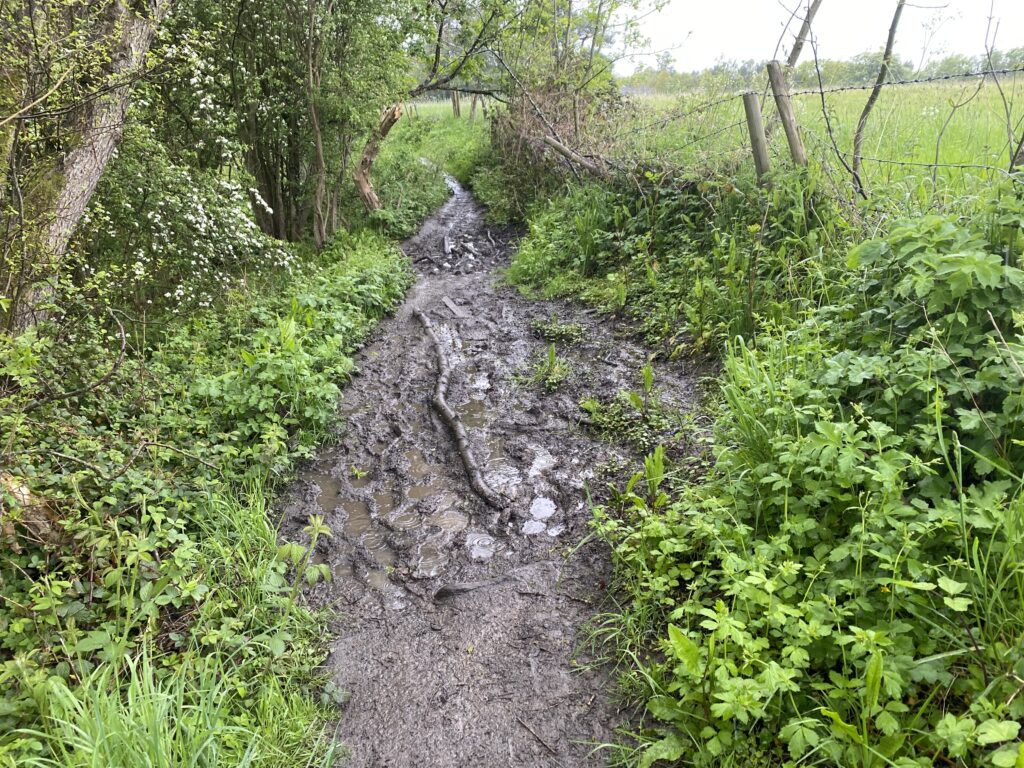
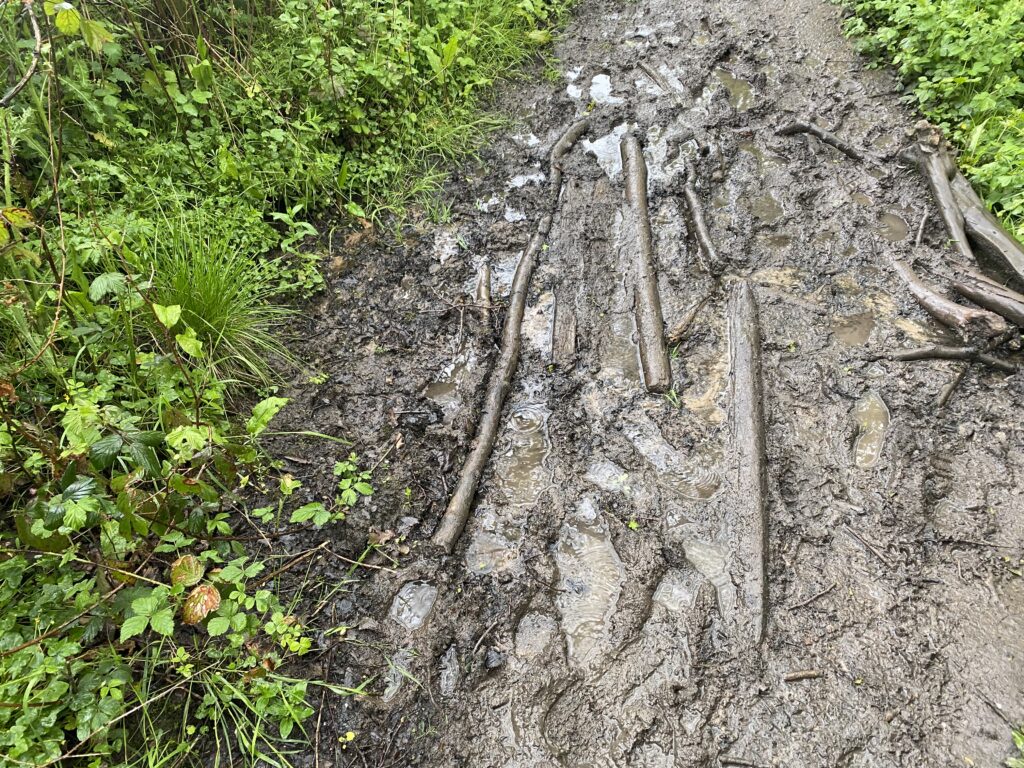
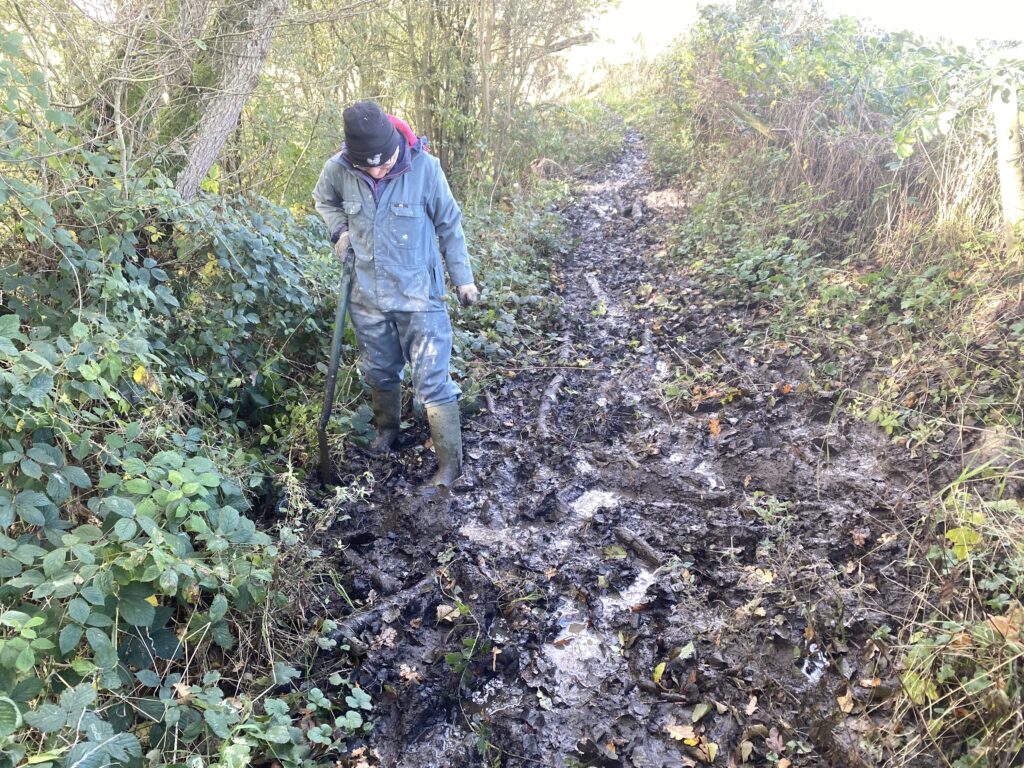

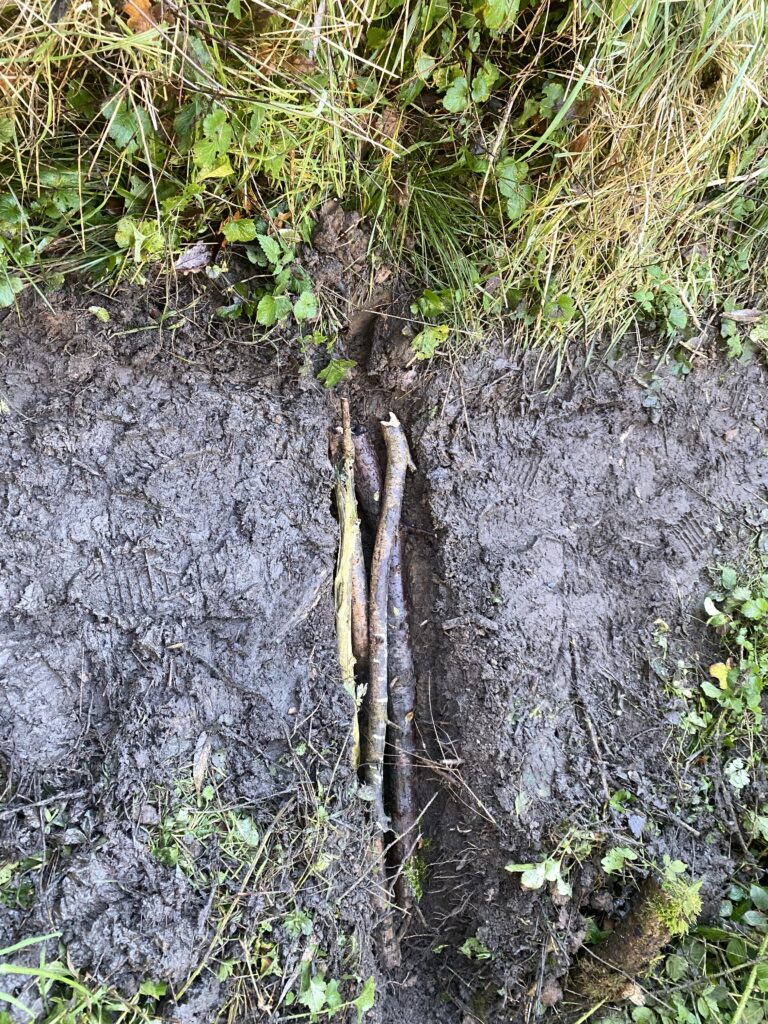
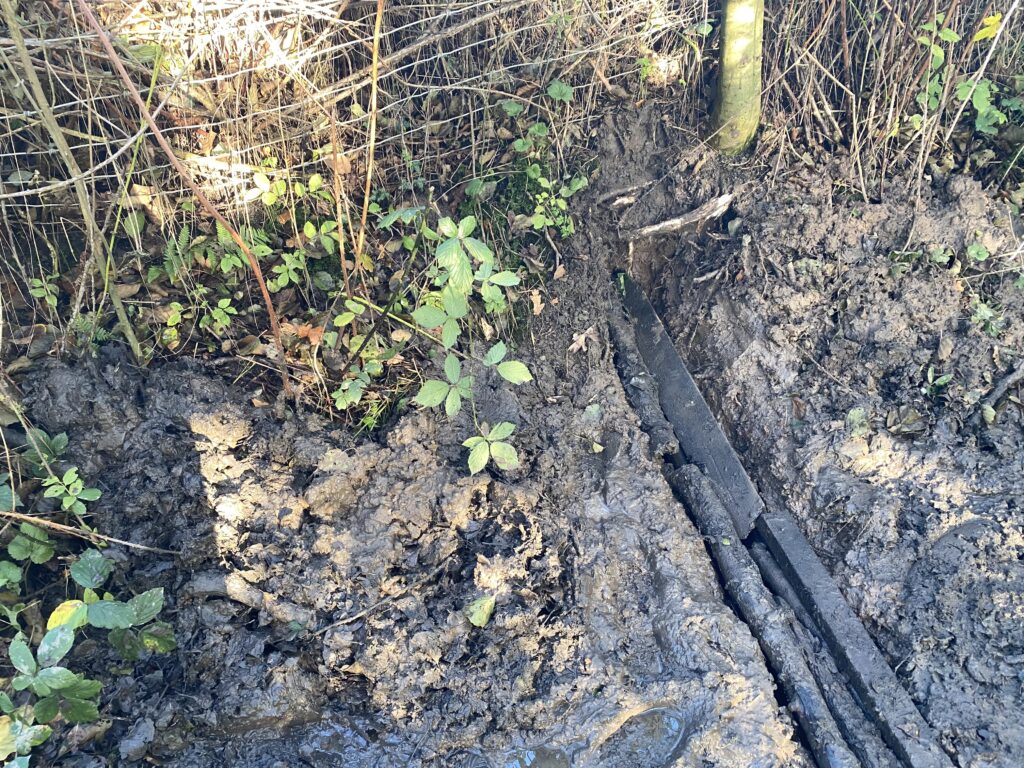
This enabled members to identify the worst field drain flows, create temporary shallow drainage grooves across the path and place branches in the grooves to ease water flows as an interim measure.
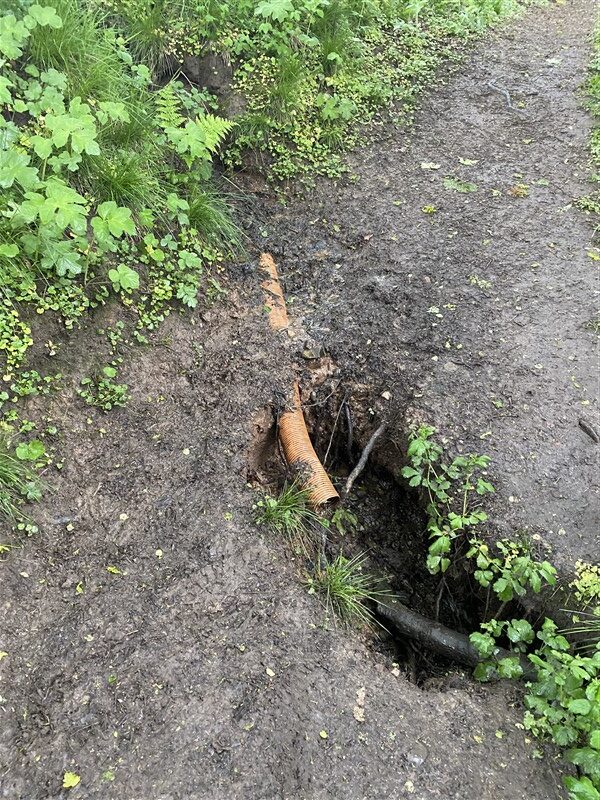
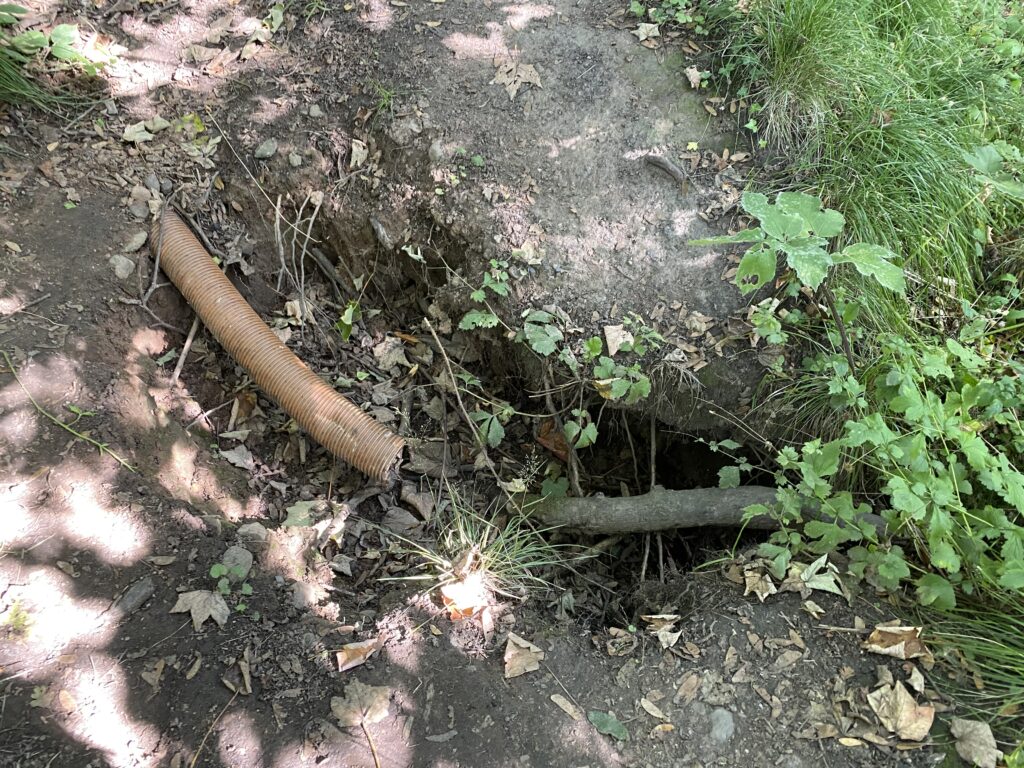
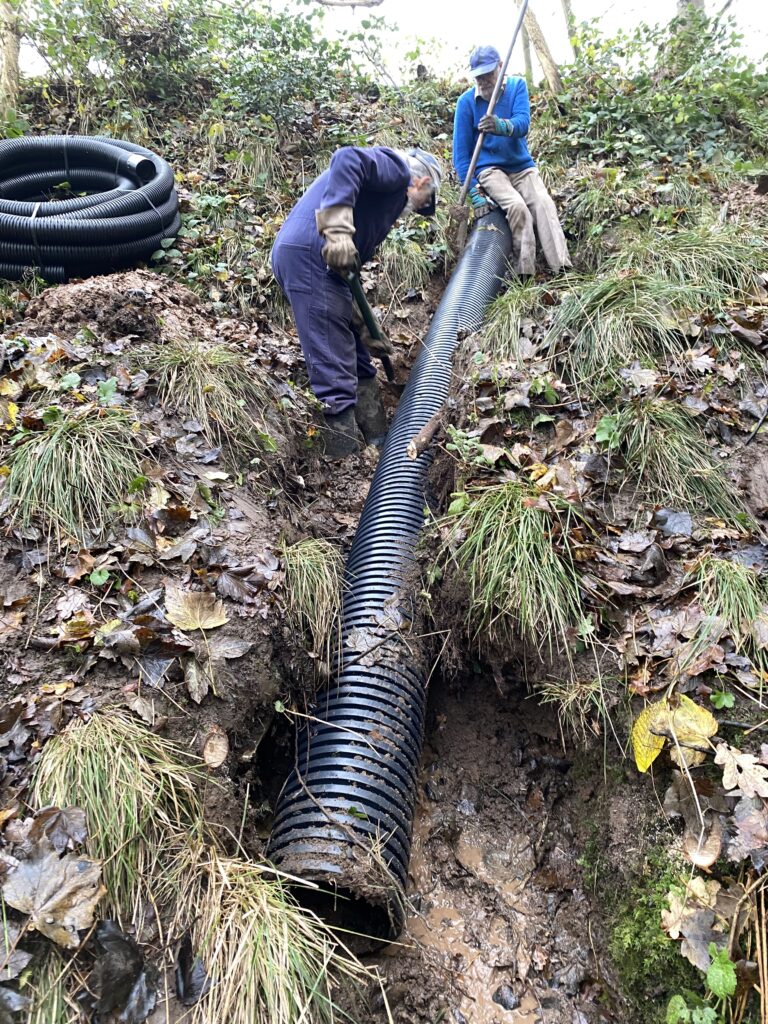
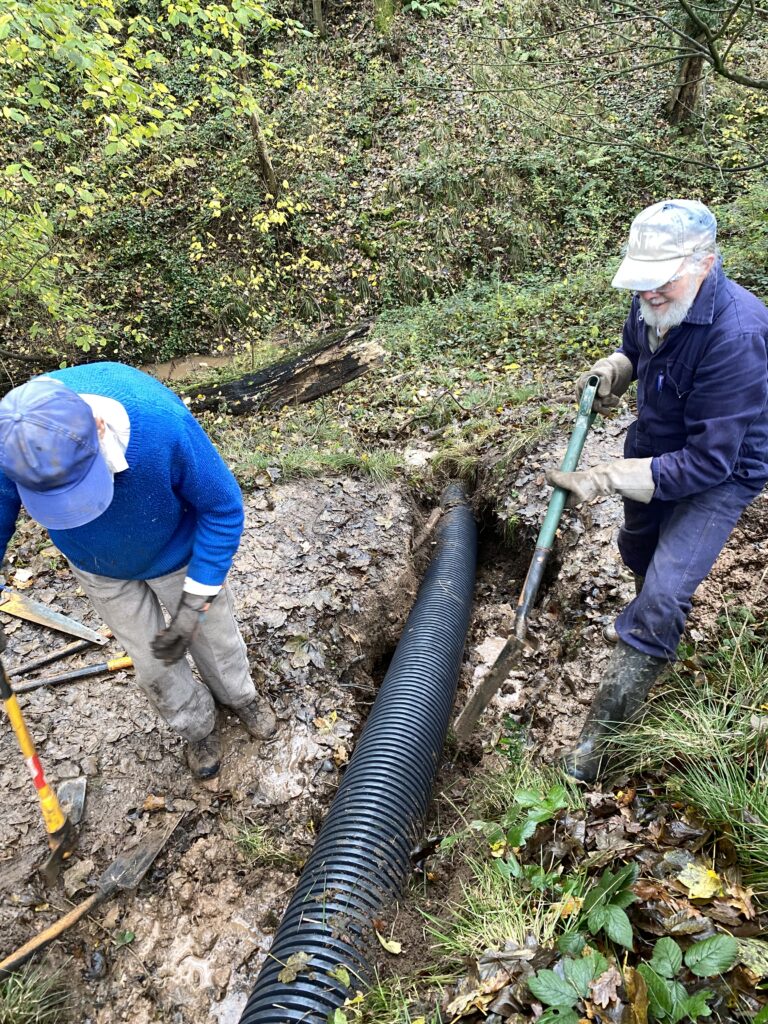

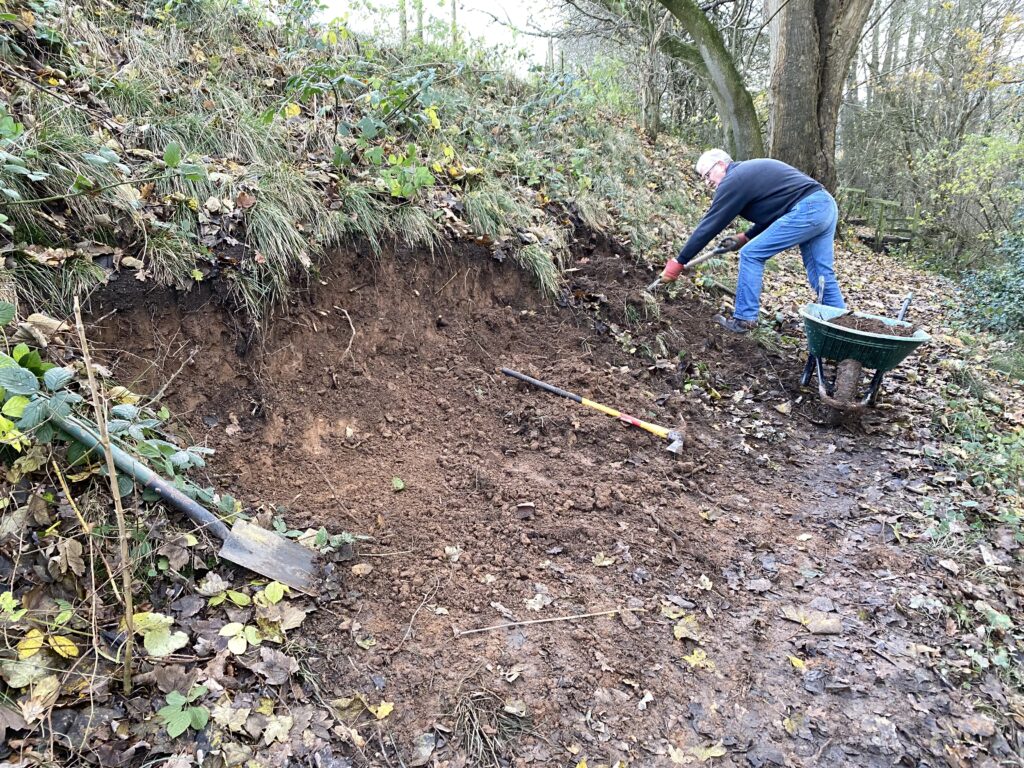
Later, the worst eroded channel was excavated to place a six metre length of twin walled 225mm diameter PVC pipe across the path. Sealed at its inlet with mesh and surrounded in gravel, plugged with clay to capture the field flow and covered in polythene to reduce soil filtration from the backfill. Subsequent backfill was dug from nearby banks to restore the path.


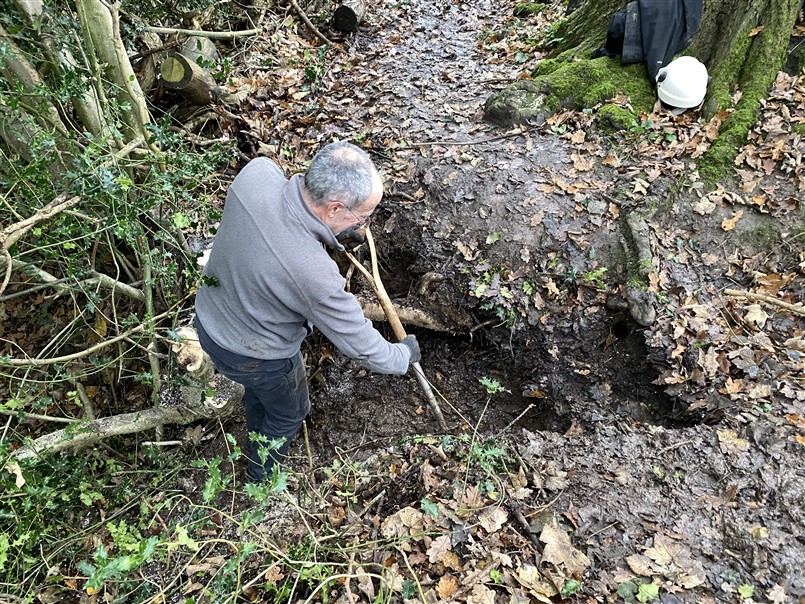

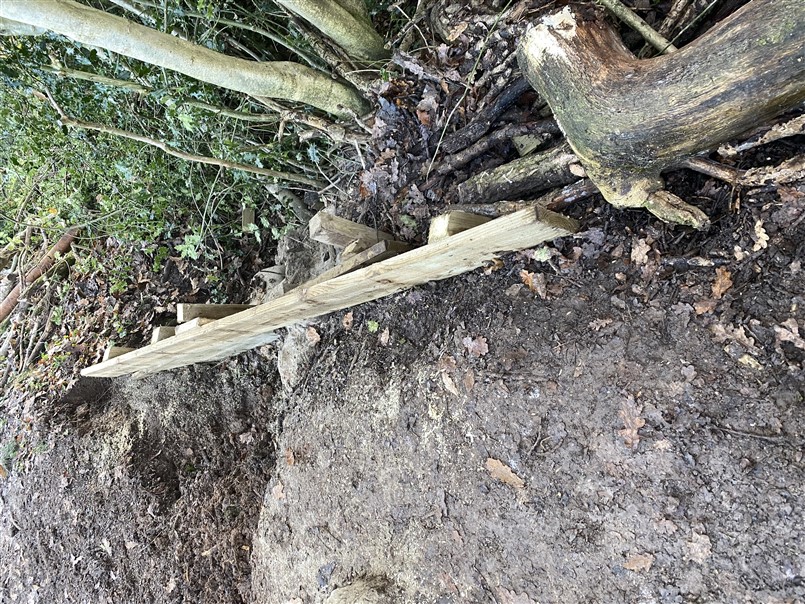
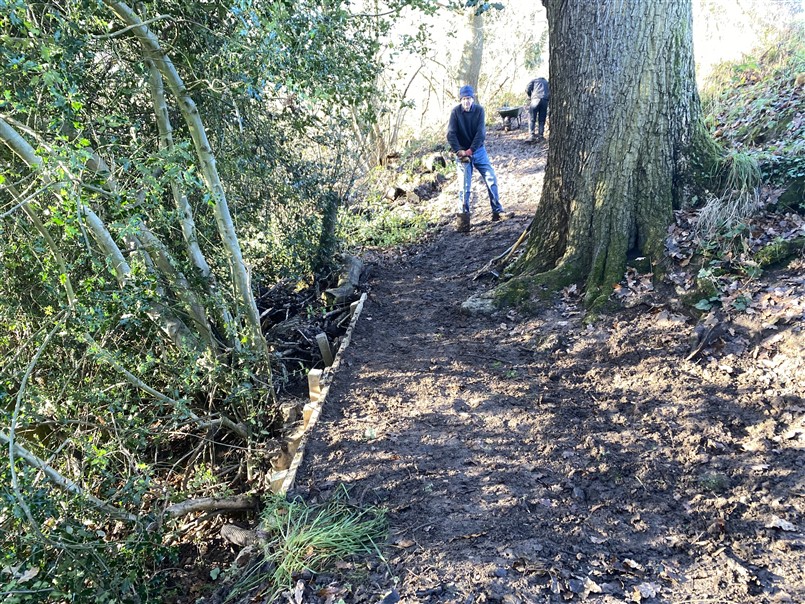
Nearby, a flow emanated from beyond the roots of a mature oak tree and had eroded a deep channel. The water source was traced to a point below and behind the roots. Two 100mm drain pipes were maneuvered between the roots and laid along the path’s dug trench. This deep channel was partially packed around the pipes with dry-concrete to support the path edge at depth and with PVC netting and gravel at its intake. Edge boards were cut to fit the path edge above the concrete bags for 800mm height supported laterally by driven stakes. The void was backfilled with soil excavated from the path’s uphill edge nearby.


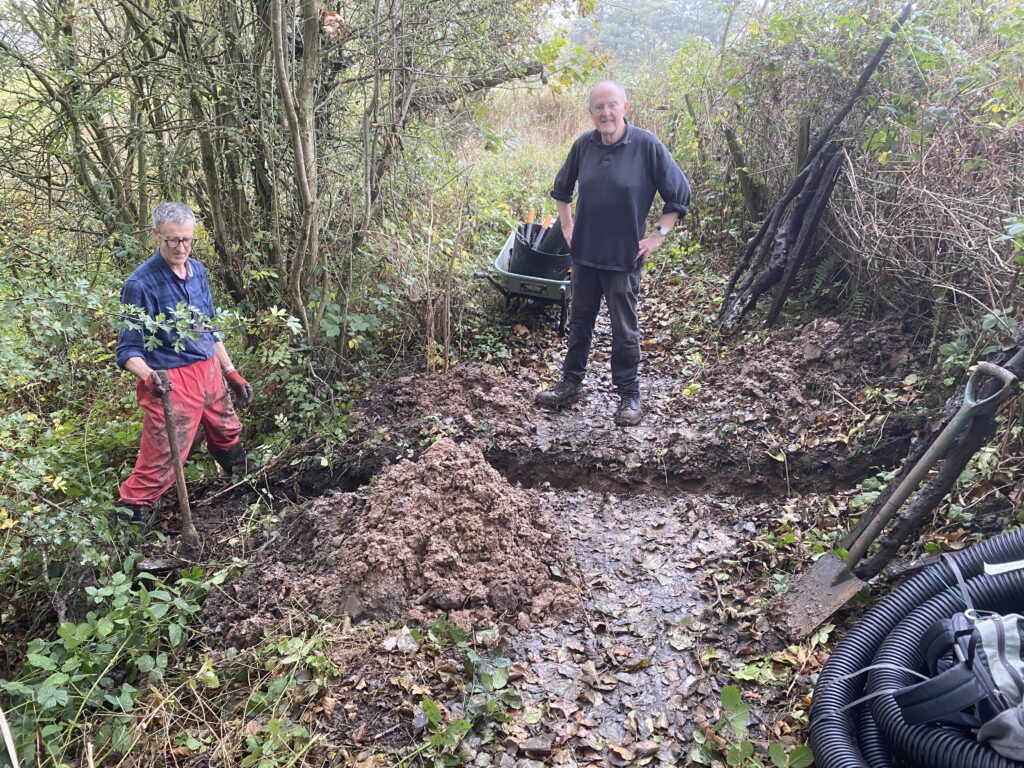

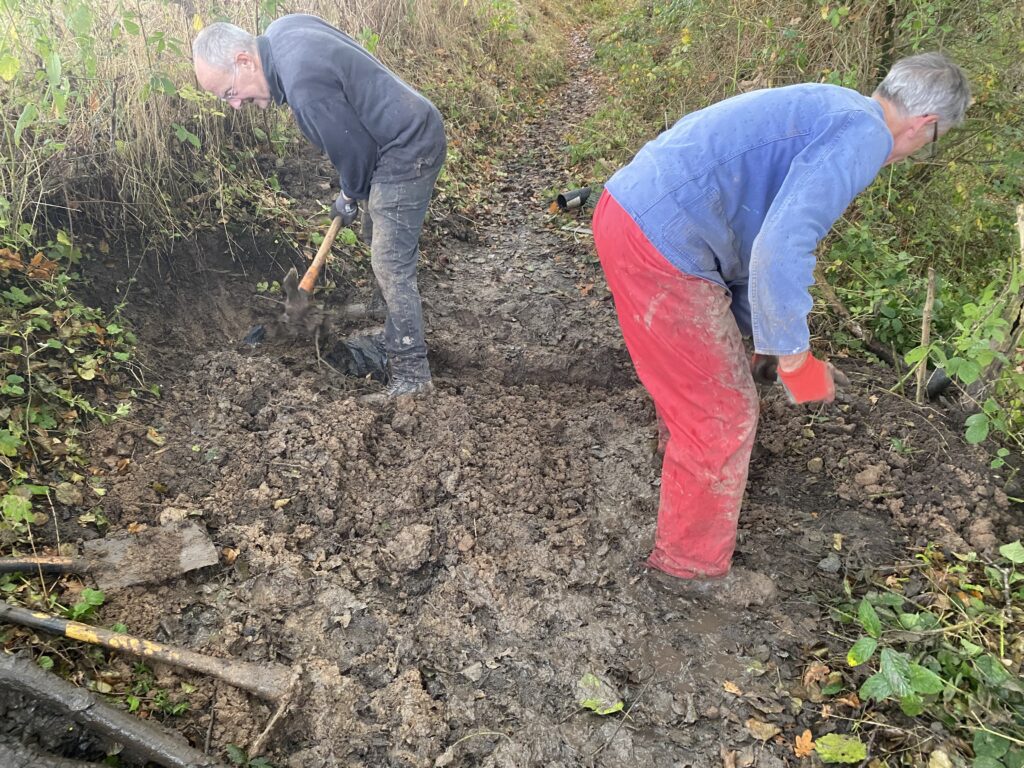
Working in water seepage/flows, trenches 400mm deep were excavated across the path at four other flooding locations, 100mm diameter pipes were laid, and similarly constructed at the upper water intake end. The path was reinstated with soil dug from nearby, Pipes may be placed in some locations further along the path in 2025.
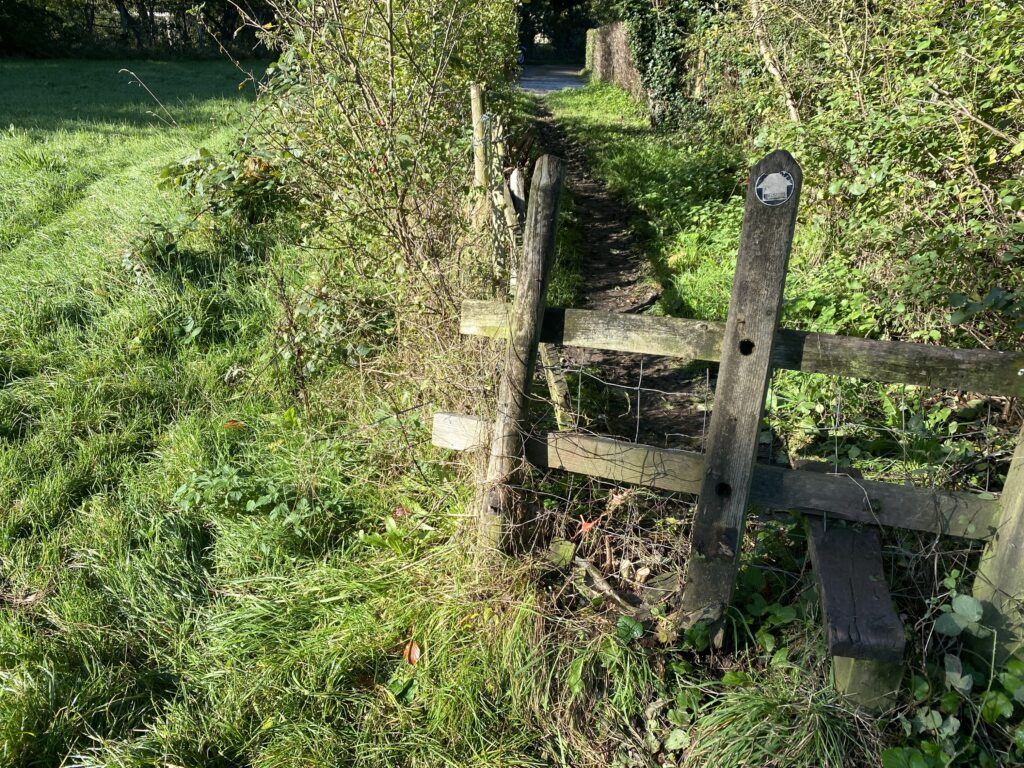
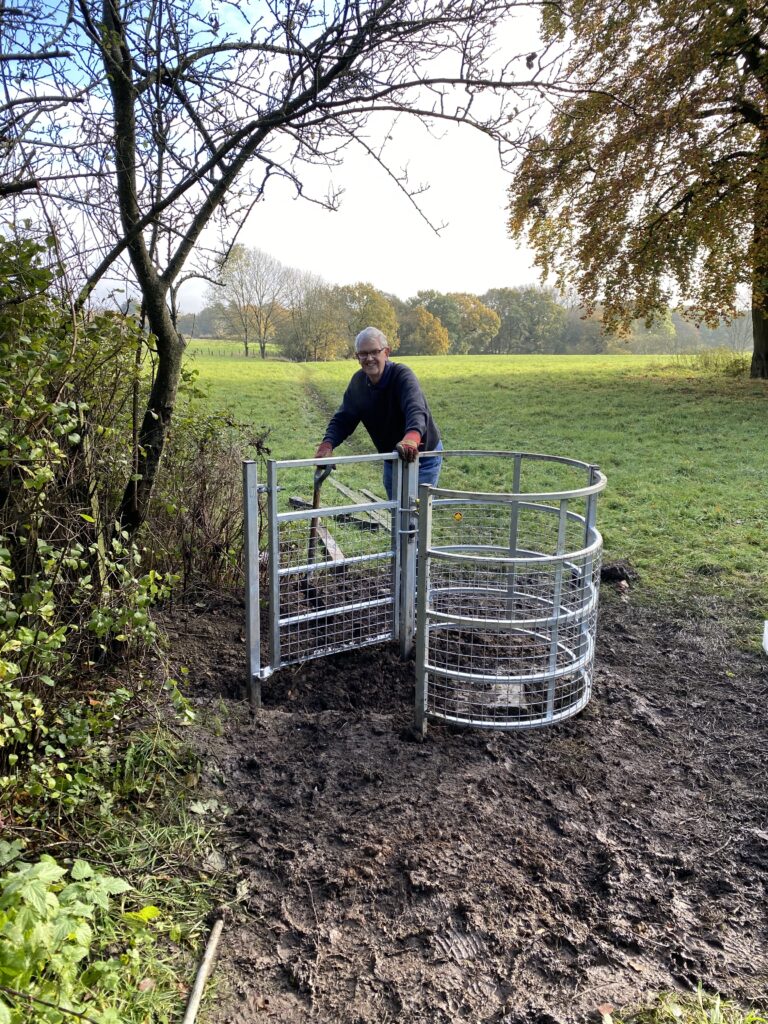
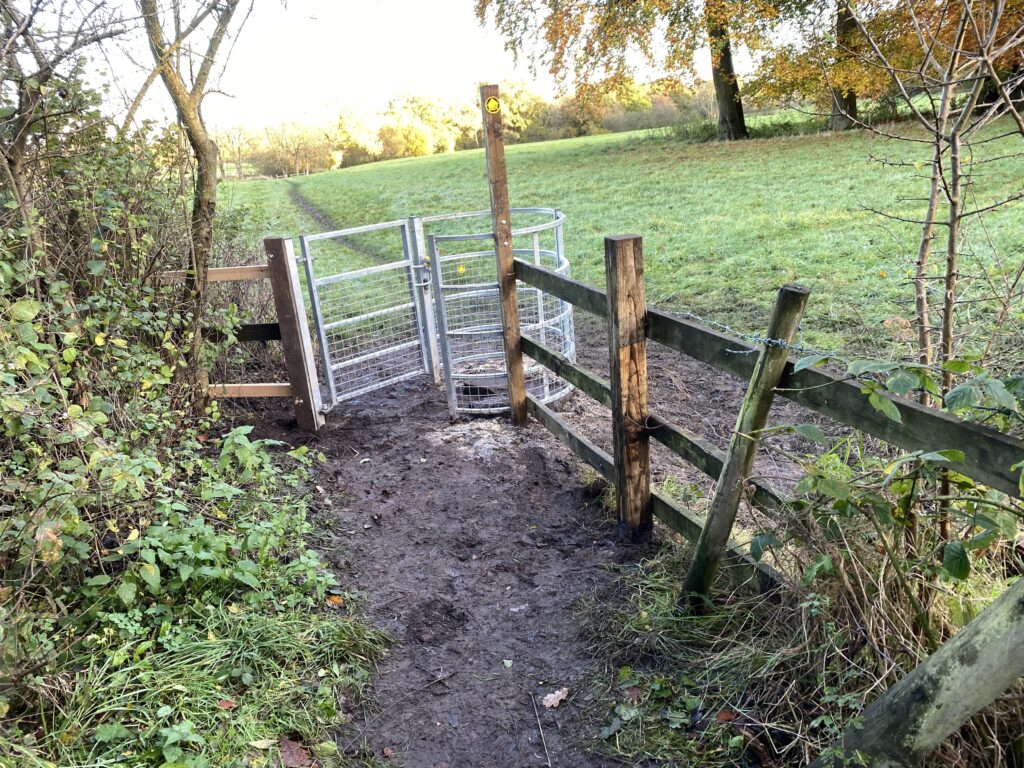
Referring to the map, at four locations B, E, F and G, the existing rotten-rickety wooden stiles and adjoining rotten wooden fence sections were dug out and taken to tip (after separating wire netting etc for similar disposal or reconnections). In three locations edge boards were placed, and levelled up with soil to form platforms for the new gates. Four galvanised steel kissing gates were constructed. Wood fence posts and rails were restored to close the gaps to meet the existing fences.
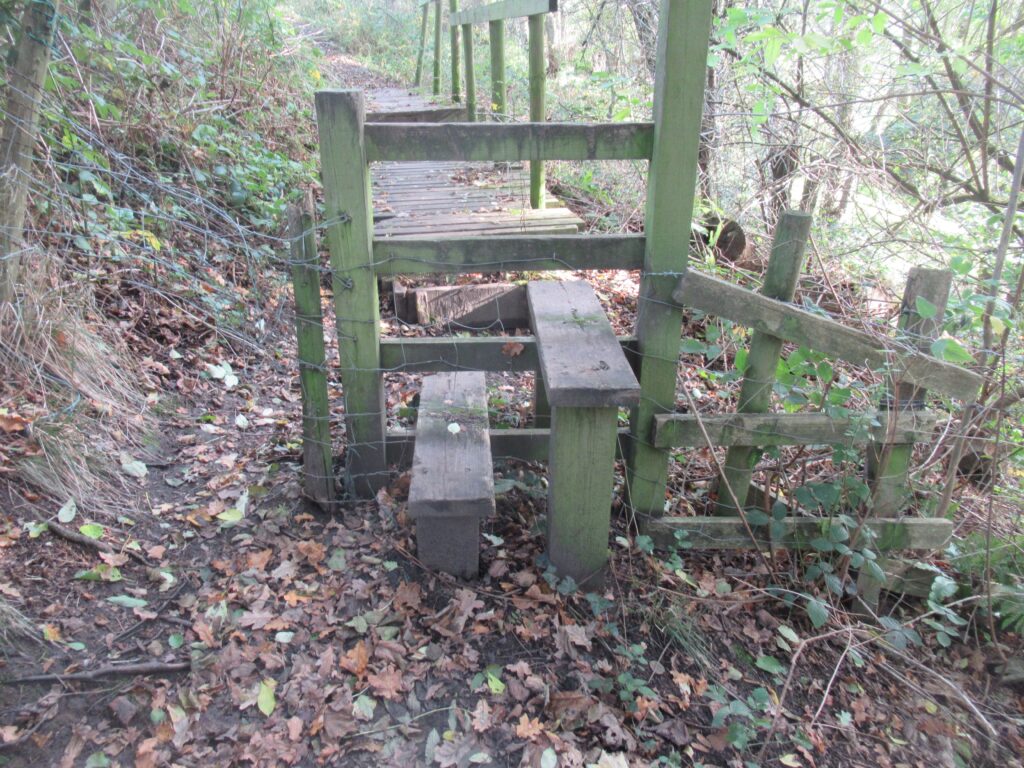

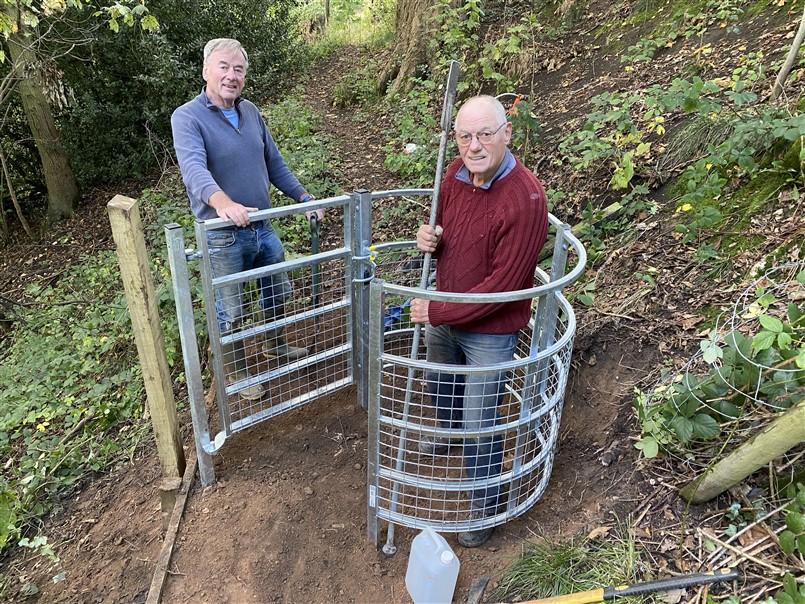


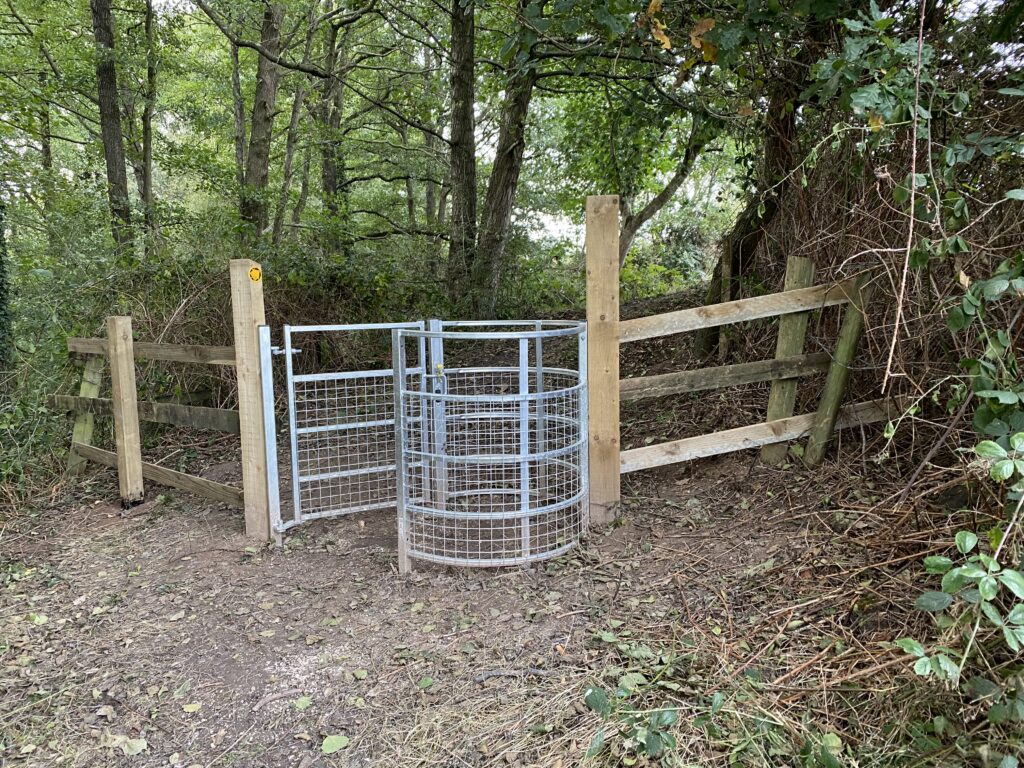
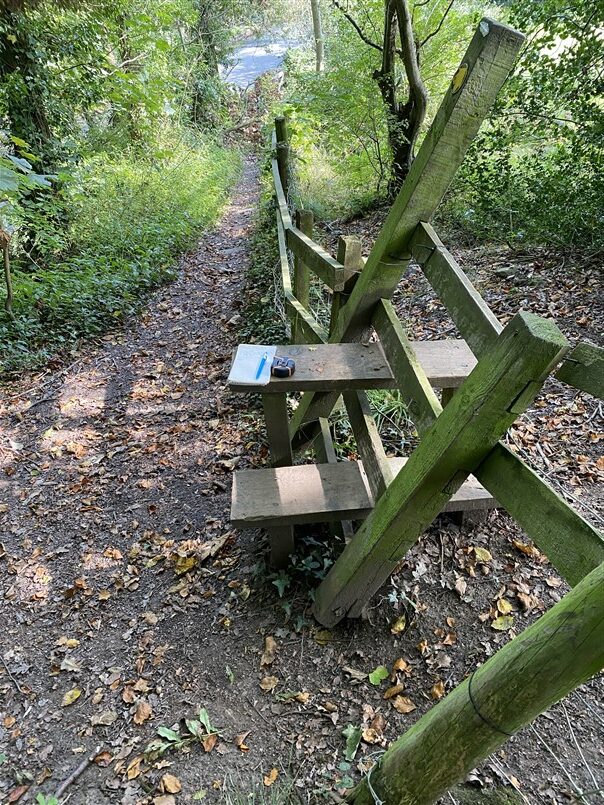
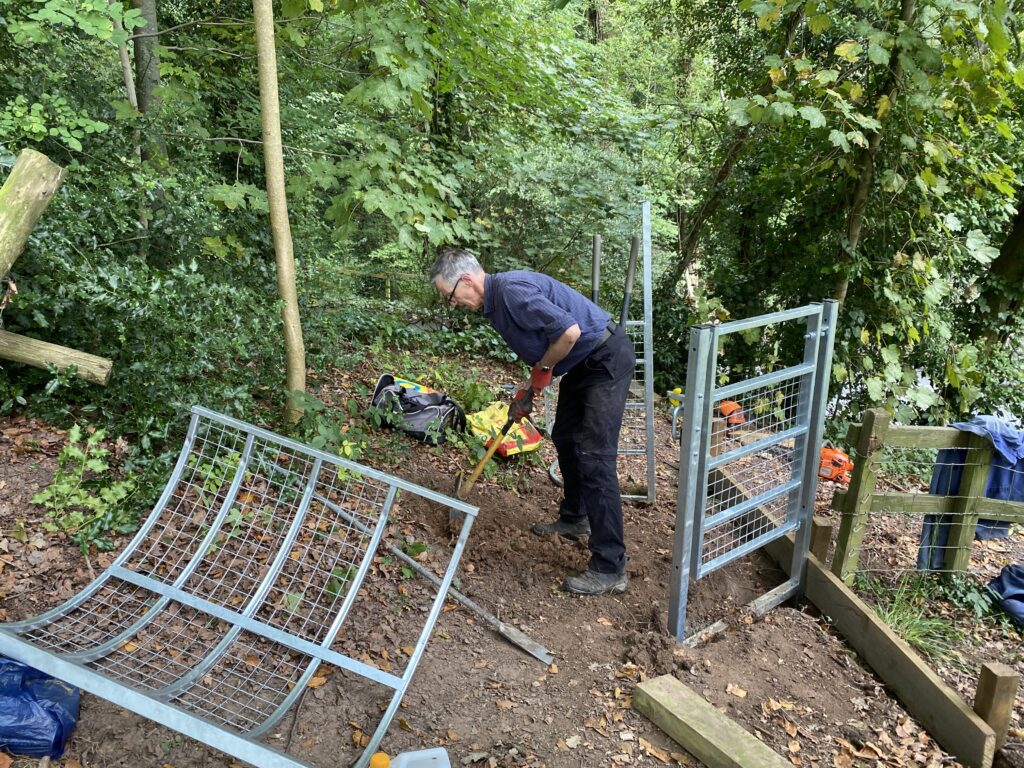
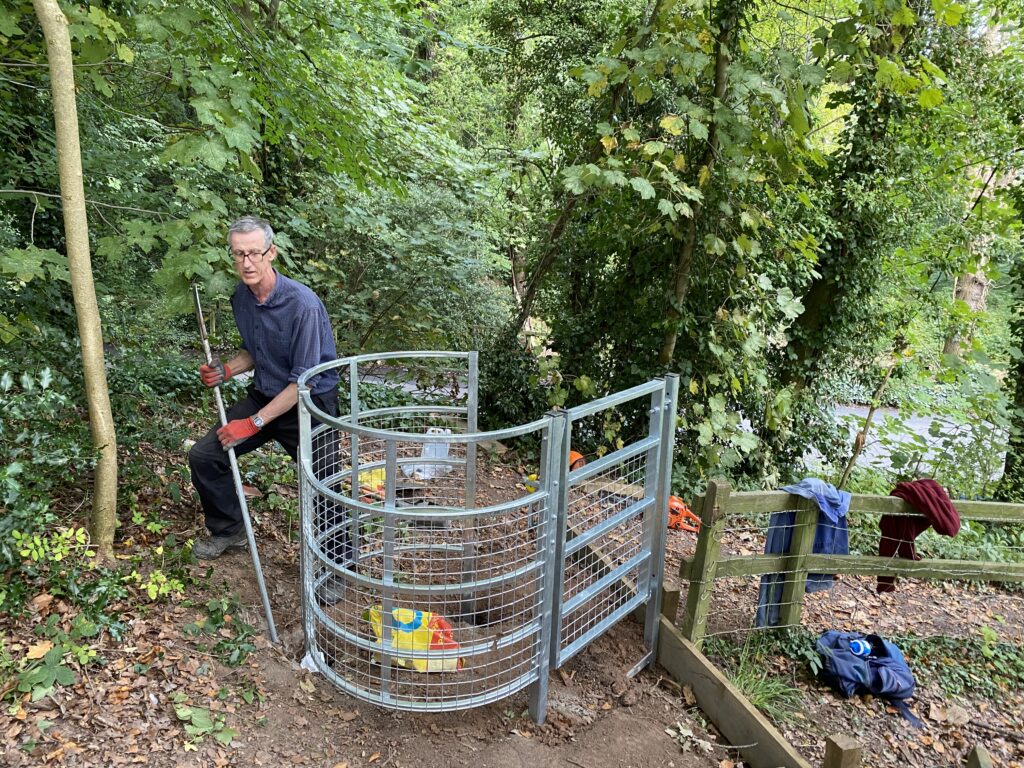
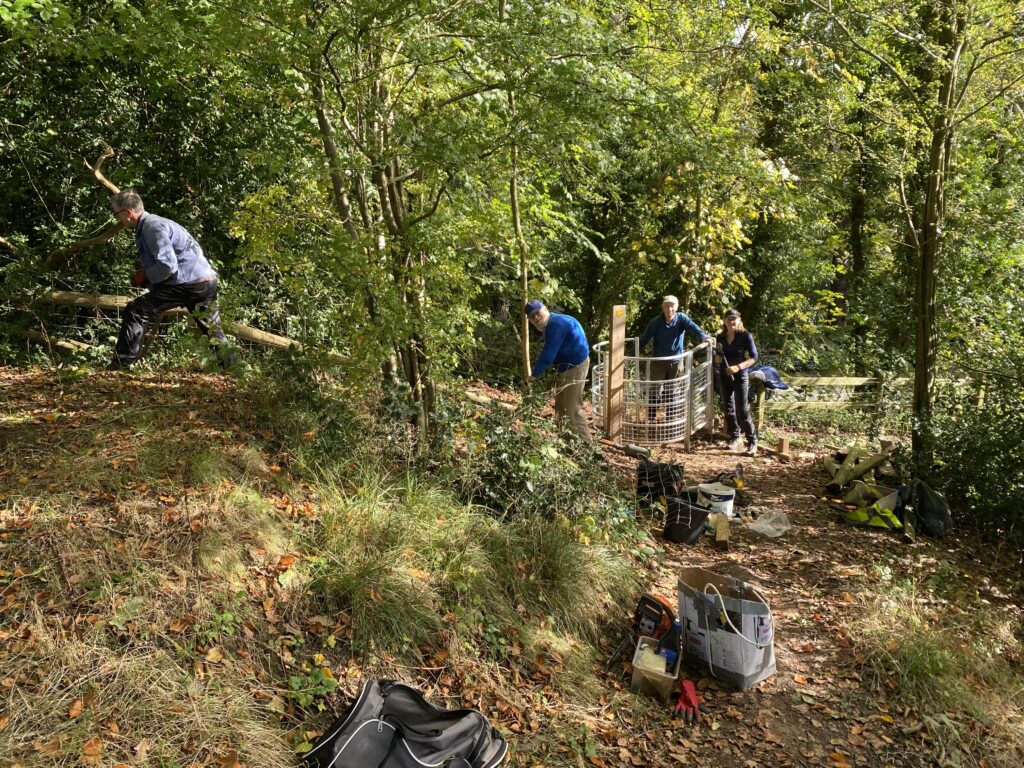
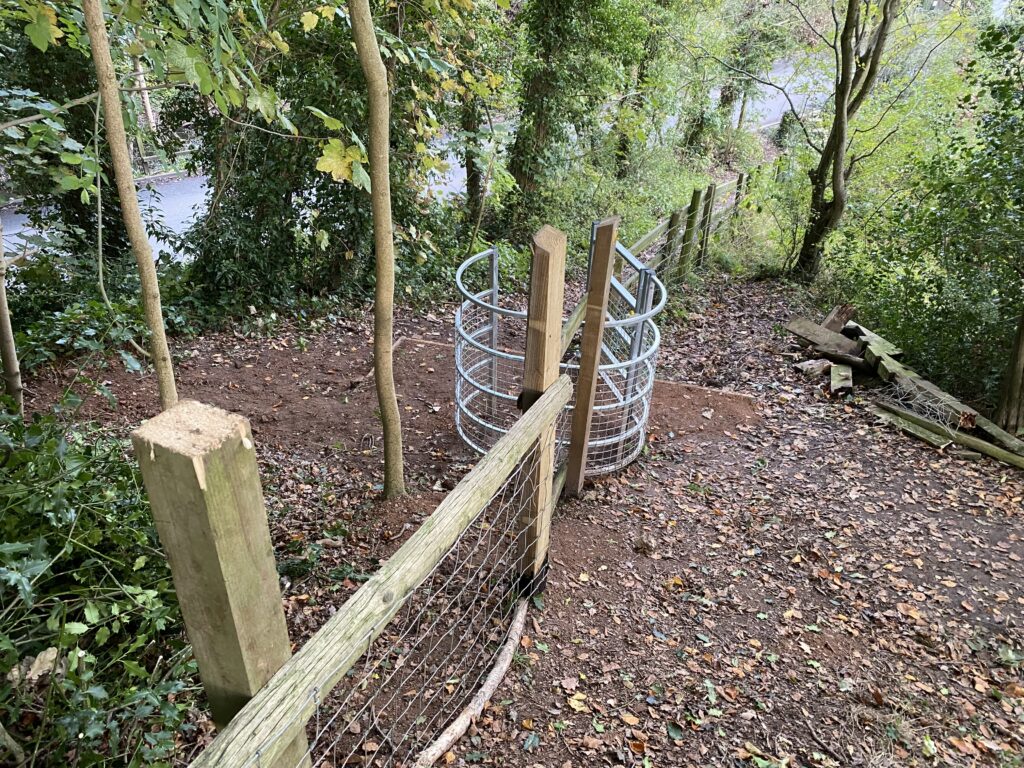
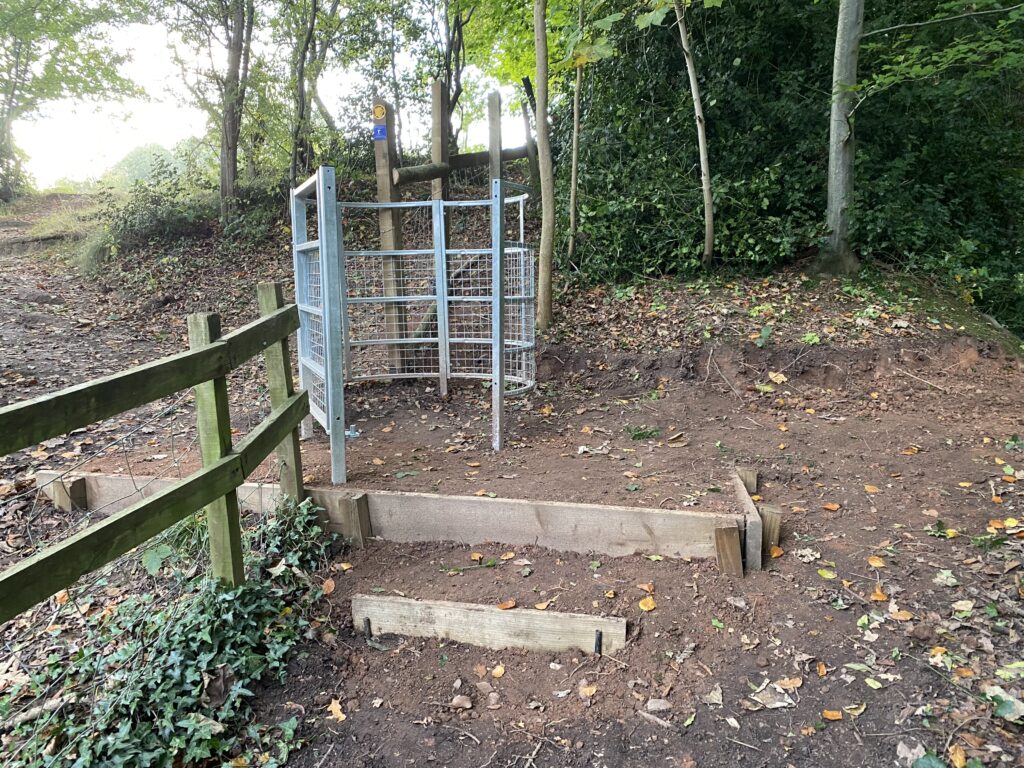


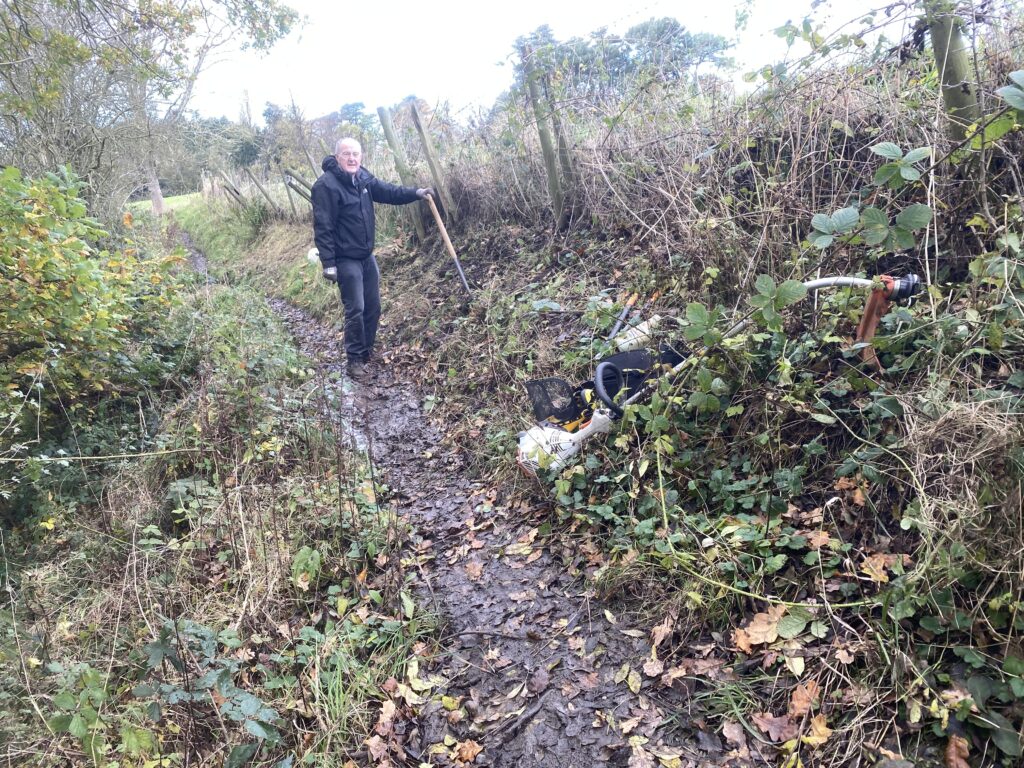
Field edge post-and-netting fencing between D and F is collapsing because most posts are rotted. The fencing has fallen dangerously (in places) towards the path. However, the extensive clearance of brambles, and shrubs by our team, as described above, has made walking the path considerably more open and on parr with most paths elsewhere within ECR Group’s ‘care’.
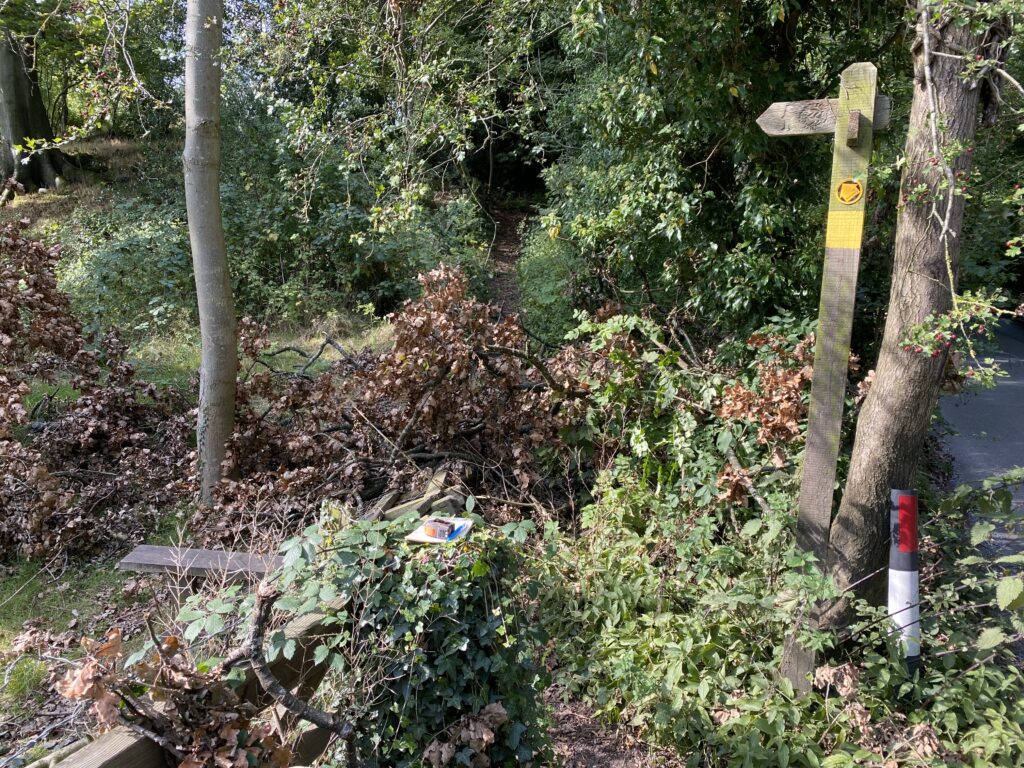
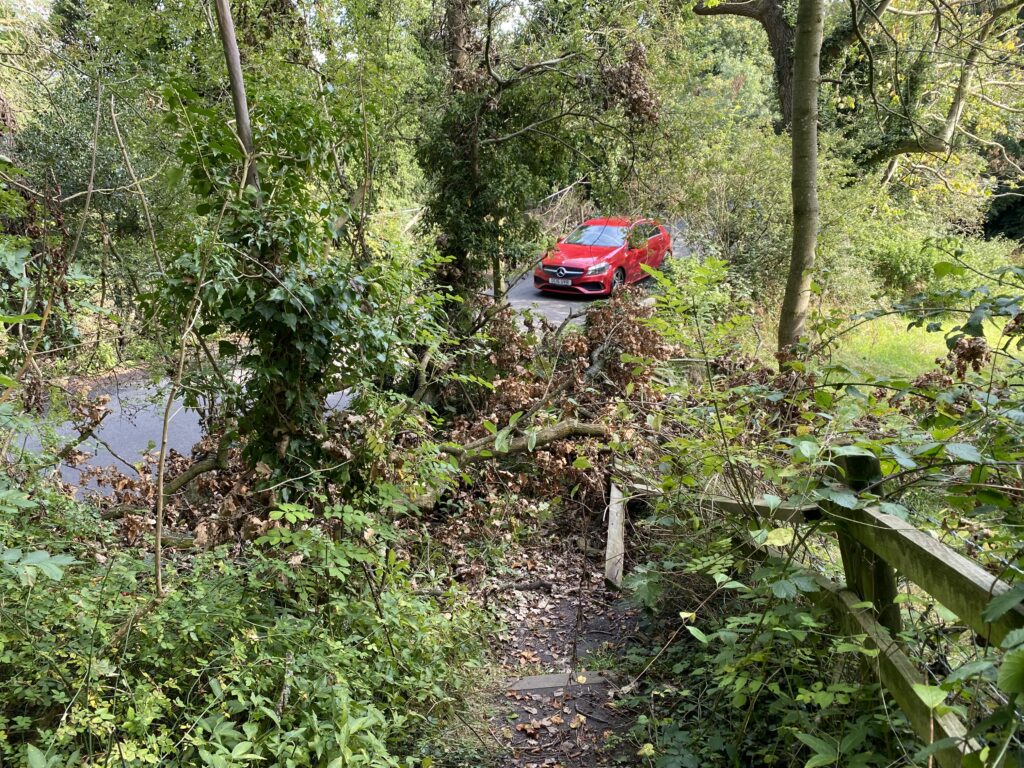

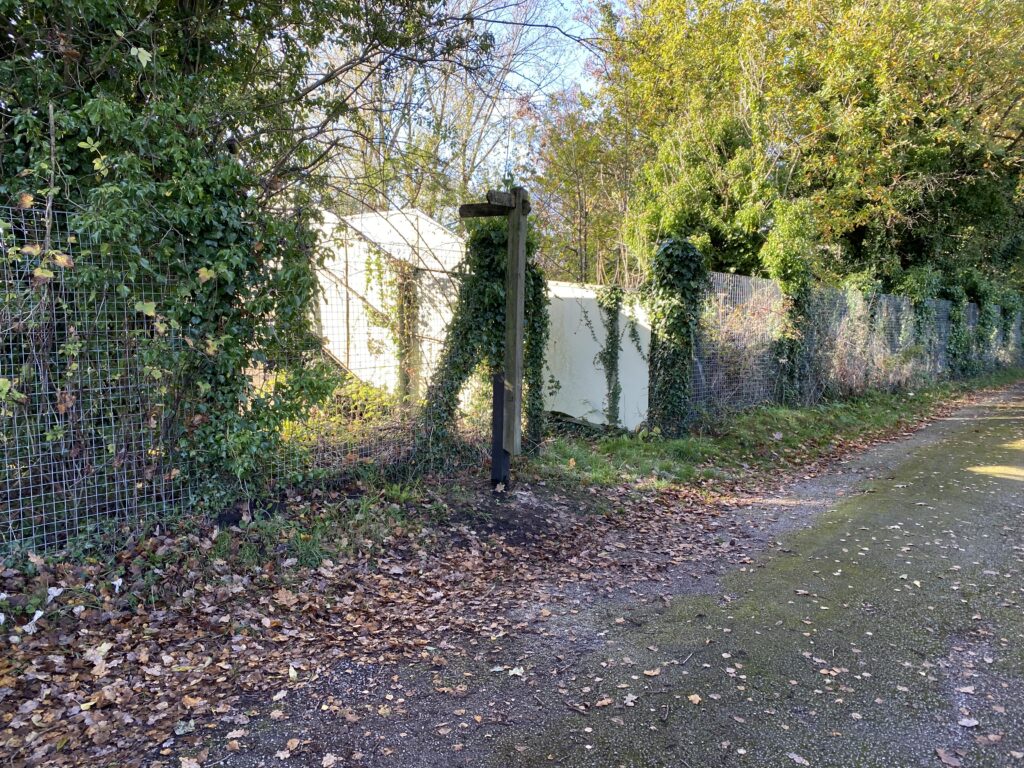
A collapsed oak tree branch blocked the roadside access at Linney’s Bridge. We cut this up and stacked its pieces under the tree in the adjacent field. The finger post was cut free from ivy and marked with yellow paint to make the roadside access more distinct. A base-rotted finger post which sported attractive traditional wooden fingers was restored to its location, at FP20’s intersection at a railway footbridge, by bolting it to a new base section.
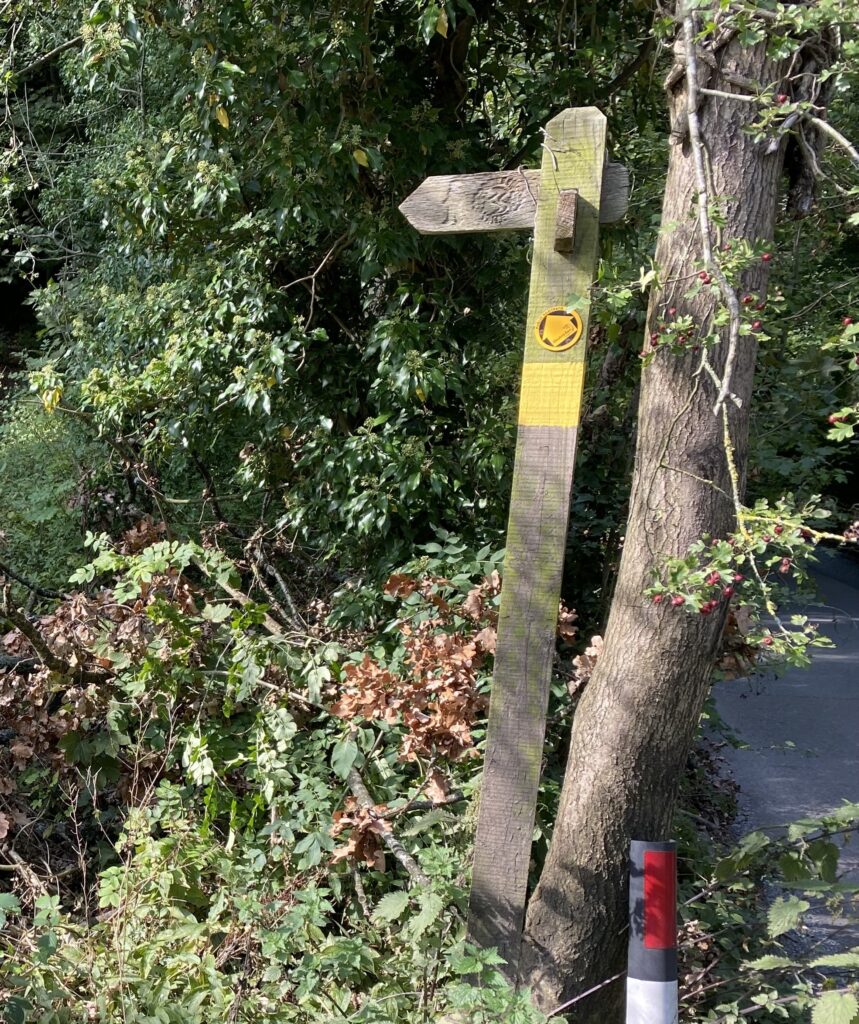
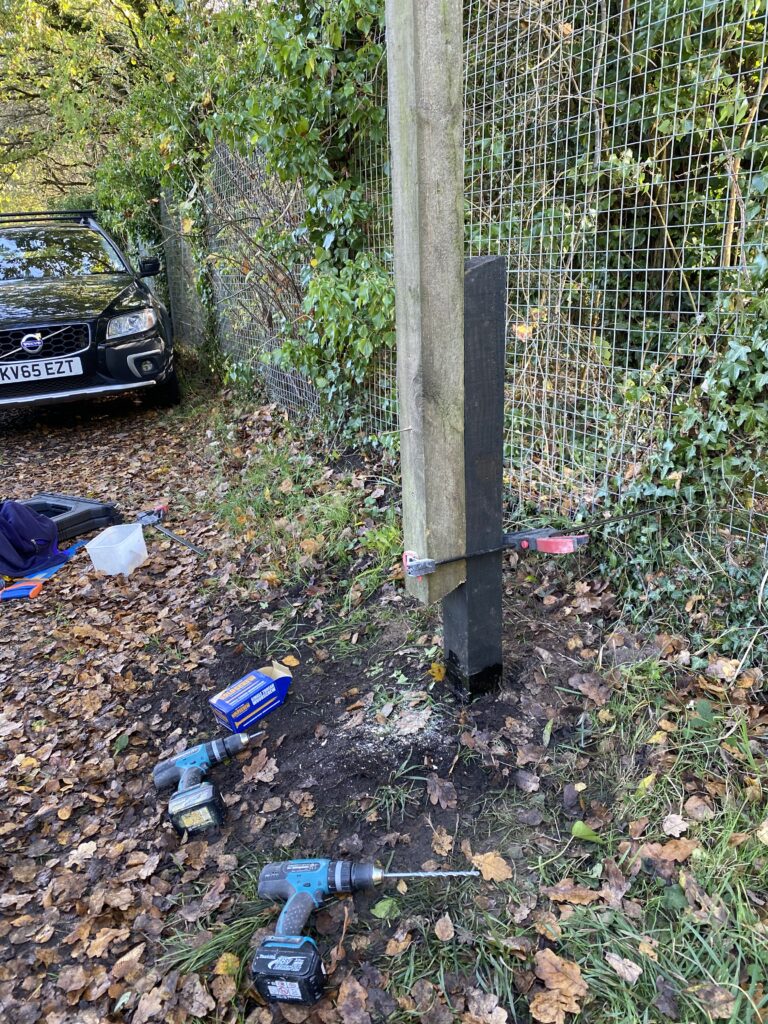
All new posts were treated at ground level with a wrapping of bituthene heat-welded to the post wood. It is recognised that the post wood rots where it is in the presence of ground moisture rich in oxygen for a zone 150mm above ground to 250mm below ground.